27 Jun Brochure Fold Cheat Sheet: How to Pick the Right Layout for Maximum Impact
When it comes to designing a brochure, most people focus on the words and visuals.
But there’s a quiet decision that can dramatically shape how your message is experienced:
Which fold should you choose?
Your brochure’s fold isn’t just structural. It’s strategic. It controls the flow of your message, how your reader interacts with the piece, and whether the experience feels flat or dynamic.
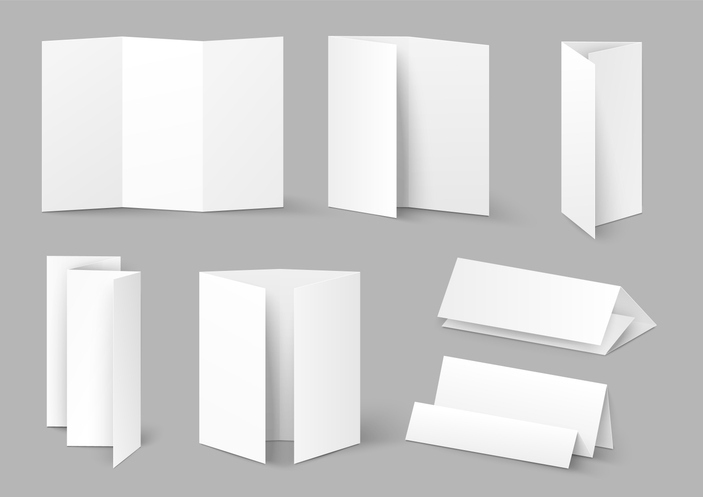
To help, we’ve created a quick-reference Brochure Fold Cheat Sheet to guide your next project. Whether you’re launching a bold campaign or explaining a service step by step, the right fold can make all the difference.
Flat Brochure (No Fold)
Use this when your message is singular and powerful.
Think: posters, menus, display pieces, or one-page promos.
- Best for: bold visuals, direct messaging, minimalism
- Works well for: handouts, retail settings, takeaways
- Not ideal for: content that needs flow or segmentation
Why it works: Flat brochures are immediate. What you see is what you get. Ideal for making a clear, bold statement with no distractions.
Tri-Fold (The Reliable Classic)
Use this when you want balance, familiarity, and compact storytelling.
Think: service menus, intro pieces, direct mail, leave-behinds.
- Best for: general info, small-to-medium content, structured flow
- Easy to mail and display
- Can feel generic without strong design choices
Why it works: It’s dependable and familiar. It makes it easy to guide your reader from intro to CTA in three clear steps.
Gate Fold (The Grand Reveal)
Use this when you want your audience to uncover something special.
Think: product reveals, event invitations, or high-end promotions
- Best for: visual storytelling, emotional impact, big launches
- Creates an interactive experience
- Requires precise layout and slightly higher production cost
Why it works: Gate folds build anticipation. When that center panel opens, all eyes are on what’s inside.
Accordion Fold (Panel-by-Panel Journey)
Use this when your content is sequential, educational, or layered.
Think: timelines, tutorials, event guides, product walk-throughs.
- Best for: processes, storytelling, and hands-on reading
- Expands to reveal multiple sections with ease
- Can feel long if content isn’t tightly written
Why it works: Accordion folds give you room to walk your audience through something step by step.
Z-Fold (Segmented Simplicity)
Use this when you need clear separation between ideas or languages.
Think: multilingual brochures, side-by-side comparisons, modular layouts.
- Best for: comparison content, multiple audiences, visual continuity
- Each panel opens cleanly with no overlap
- Less dynamic and more utilitarian than immersive
Why it works: Z-folds are versatile and easy to work with. They are great for straightforward communication that still stands out.
How to Use This Cheat Sheet
Use it early, before you finalize copy or visuals. Think about:
- What kind of experience you want the reader to have
- How much content you need to share
- Whether your message unfolds, compares, instructs, or impresses
Your fold is the framework for how your brochure will be read. Use it intentionally, and you’ll design a piece that engages from the first touch to the final panel.
Need Help Choosing the Right Fold?
We’ve helped businesses of all sizes match their message to the right structure so their brochures don’t just look great, but actually perform.
Let’s talk about your content, your goals, and which fold will do the heavy lifting.